"Doctor, I clearly didn't eat anything sweet — why did my blood sugar still spike?"
Ms Chen looked puzzled in clinic. Her father has had diabetes for three years. He already avoids sweets and sugary drinks, eating only plain congee, steamed buns, and rice noodles — yet his post-meal blood sugar hit 13!
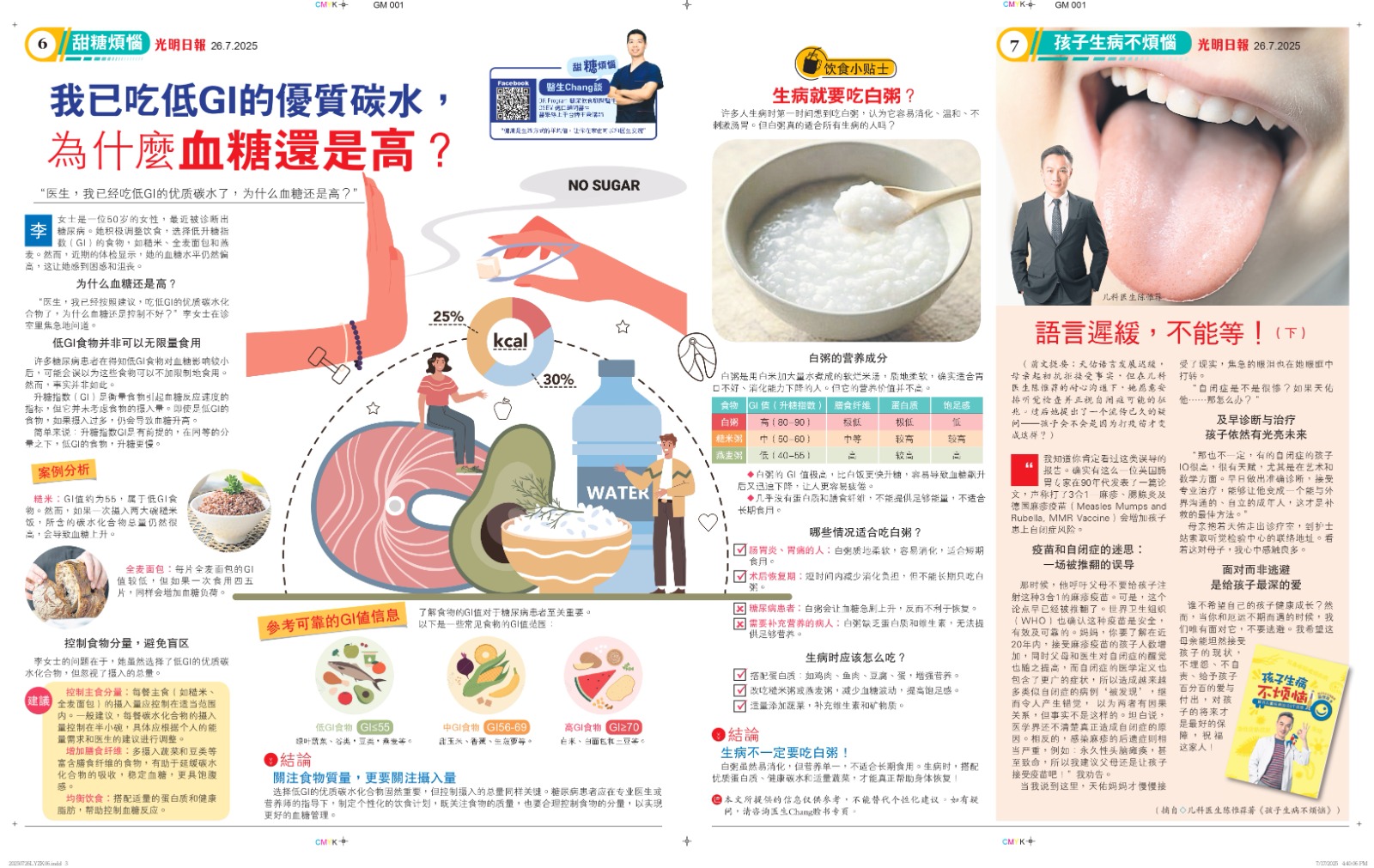
I glanced at his food diary and asked: "Do you know GI and GL?" She shook her head.
I nodded: "That's it — without understanding GI and GL, post-meal spikes are their doing."
GI: Glycemic Index — how fast food raises blood sugar
GI (Glycemic Index) measures how quickly a food raises blood sugar, using glucose (GI = 100) as the benchmark:
Fast rise!
- White rice, steamed buns
- White bread, rice noodles
- Congee, french fries
Moderate speed
- Sweet corn
- Sweet potato (boiled)
- Banana, pineapple
Slow rise!
- Brown rice, oats
- Mung beans, apple
- Milk, nuts
Ms Chen was shocked: "So my dad's congee is actually high GI?"
"Exactly. Congee has a GI of about 85–90 — it's essentially liquid carbohydrate. Blood sugar surges soon after eating."
GL: Glycemic Load — the key to how high it climbs
"But doctor, my dad eats very little!" That's where GL (Glycemic Load) comes in. It considers not just speed but how much you eat:
Let's compare — see how different one bowl can be:
A bowl of congee
Very high GI (85), ~30g carbs
Half bowl brown rice
Lower GI (50), ~20g carbs
"Your dad's congee may look plain, but with high GI and decent portion, overall GL is high — no wonder post-meal blood sugar rises."
Wrong! It's not just sweetness — it's how fast and how much food becomes glucose. The key is not just what you eat, but how much + the food's glycemic properties.
Eat smart — stop the blood sugar rollercoaster!
-
1. Switch to low-GI staples
White rice → brown/multigrain rice; white noodles → whole wheat/buckwheat. Rule: the whiter and more processed, the higher the GI. -
2. Eat vegetables first — create a blood sugar buffer
Start with a bowl of greens before starch. Fibre slows the rate of glucose rise. -
3. Control portions — keep GL in check
Sweet potato is fine — but not two at once. Half a bowl of congee + sides beats a full bowl. Target GL under 20 per meal. -
4. Mix foods to lower overall GI
Pair high-GI staples with protein (tofu, eggs, fish) and healthy fats to slow gastric emptying and reduce spike speed.
🌟 Three weeks later — how is Chen's father doing?
On my advice, Ms Chen designed a low-GI, low-GL diet for her father: congee swapped for oat porridge, every meal with vegetables and protein, staples capped at one bowl. Three weeks later:
- ✅ Post-meal glucose dropped from 13 to 8.5
- ✅ More energy, no more afternoon fatigue
- ✅ Even found a healthy substitute for his beloved morning congee
Ms Chen said happily: "It wasn't eating the wrong things — I just didn't understand the blood sugar math behind it."
Eat smart, stay stable
Without understanding GI and GL, blood sugar rides a rollercoaster. Diabetes diet is not just about sweetness.
Remember two keys:Low GI = slower rise; low GL = less total spike.