"Doctor, I was just diagnosed with diabetes. My HbA1c is 7.4%, but the doctor said it's not too serious yet. Is it still possible to reverse it?"
In clinic, Mr Chen looked at me nervously — anxious yet hopeful. At 45, newly promoted to management with life settling down, he suddenly received a health report confirming diabetes.
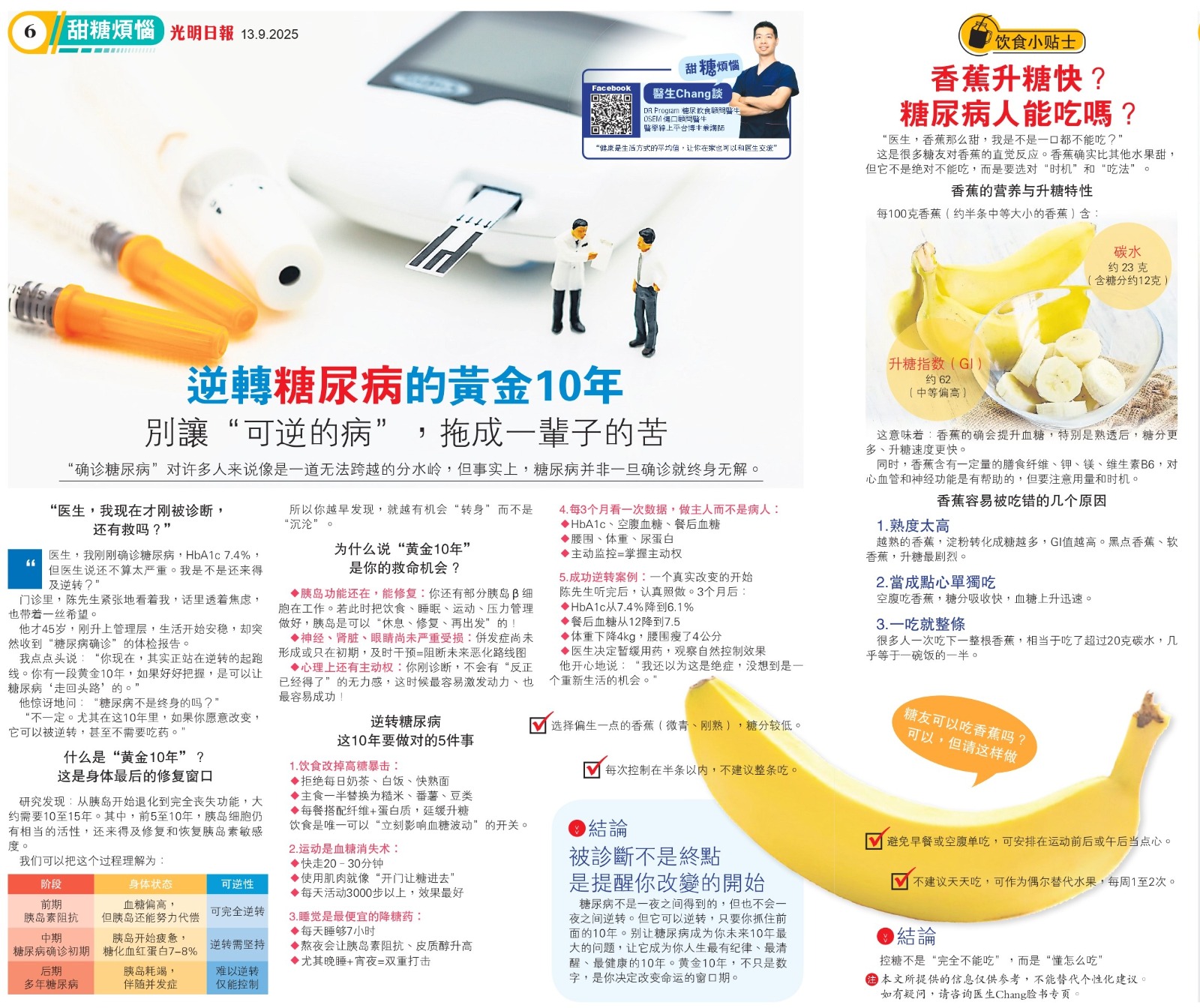
I nodded and said:
"You are actually standing at the starting line of reversal right now. You have a golden 10-year window — if you seize it, diabetes can go into reverse."
He asked in surprise: "Isn't diabetes lifelong?"
"Not necessarily. Especially within these 10 years, if you are willing to change, it can be reversed — even without medication."
What is the "Golden 10 Years"? The body's last repair window
Research shows it takes roughly 10–15 years from the start of pancreatic decline to complete loss of function. During the first 5–10 years, beta cells still retain significant activity — there is still time to repair and restore insulin sensitivity.
| Stage | Body status | Reversibility |
|---|---|---|
| 🔹 Early stage | Insulin resistance: Blood sugar is elevated, but the pancreas can still compensate | ✅ Fully reversible |
| 🔸 Mid stage | Early diabetes diagnosis: Pancreas begins to fatigue; HbA1c 7–8% | 🔄 Reversal requires persistence |
| 🔴 Late stage | Long-standing diabetes: Pancreatic exhaustion with complications | ❌ Hard to reverse |
The earlier you detect it, the better your chance to turn around rather than decline.
💡 Why is this your life-saving opportunity?
- Pancreatic function remains — it can be repaired: Some beta cells are still working. With proper diet, exercise, and stress management now, the pancreas can rest, repair, and recover!
- Nerves and kidneys not yet severely damaged: Complications have not formed or are still early — timely intervention blocks the path to worsening.
- You still have psychological agency: Freshly diagnosed, you won't feel the helplessness of "I already have it anyway" - motivation is highest and success most likely now!
Reversing diabetes: 5 things to get right in these 10 years
- 1. Cut high-sugar spikes — choose low-GL combinations Skip daily bubble tea, white rice, and instant noodles. Replace half your staples with brown rice, sweet potato, and legumes. Pair fibre + protein at every meal to slow glucose rise.
- 2. Post-meal exercise is blood sugar magic Walk briskly 20–30 minutes after meals. Using muscles is like opening the door for glucose to enter. 3,000+ steps daily works best.
- 3. Let the pancreas rest — activate it only once a day Limit starchy meals to one per day. Other meals: vegetables, protein, healthy fats. Frequent small meals = constant pancreatic stimulation → faster exhaustion.
- 4. Sleep is the cheapest blood sugar medicine Get 7 hours of sleep daily. Late nights raise insulin resistance and cortisol. Late sleep + midnight snacks = a double hit.
- 5. Review your numbers every 3 months — be in charge, not a passive patient Actively track HbA1c, fasting glucose, post-meal glucose, waist circumference, and weight. Active monitoring = staying in control.
🌟 Success story: the beginning of real change
Mr Chen followed through diligently: eggs + oats + greens for breakfast; controlled lunch portions; no carbs at dinner; a 30-minute walk after lunch; in bed before 11 pm. Three months later:
- HbA1c dropped from 7.4% to 6.1%
- Post-meal glucose fell from 12 to 7.5
- Weight down 4 kg; waist 4 cm smaller
- Doctor deferred medication to observe natural control
He said happily: "I thought this was a death sentence — I never expected it to be a chance to start life anew."
The window to change your destiny
Diagnosis is not the end — it is a reminder to change.
Don't let diabetes become your biggest problem for the next 10 years; let it become your most disciplined, healthiest decade.
What will you choose?